

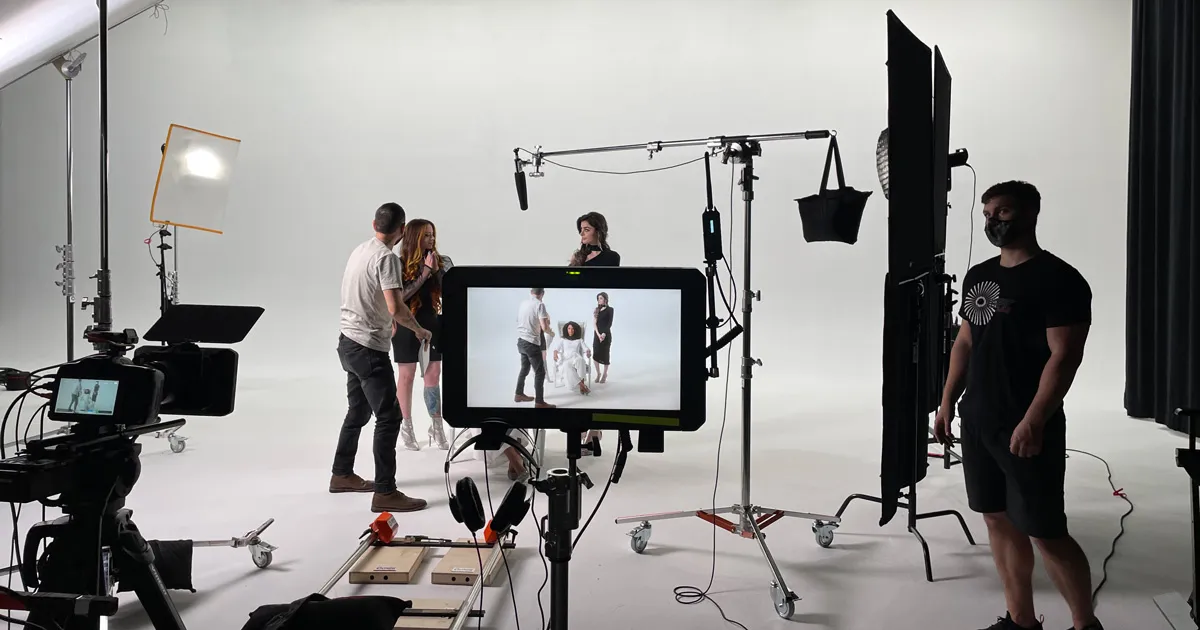
Every successful film requires more than simply a strong story, skilled performers, and a visionary director. One of the most important yet frequently ignored aspects of filmmaking is studio space. From pre-production planning to post-production execution, the appropriate studio environment has a significant impact on the quality, efficiency, and creative freedom of a film project.
Today’s TV film production studios are more than just empty rooms with cameras. They are well-designed environments that promote narrative, technology, cooperation, and efficiency.
A Controlled Environment that Promotes Precision
One of the most significant advantages of filming in a studio is control. Unlike outdoor or on-location shoots, studios provide a controlled setting in which lighting, sound, and set conditions are consistent. This is especially important for productions that need numerous filming days or reshoots.
Professional studios enable filmmakers to replicate the identical lighting arrangement, camera angles, and sound circumstances with no external interference. Weather, noise pollution, and unexpected disruptions are eliminated, making studios perfect for complex productions requiring precision and regularity.
Creative Freedom Through Custom Set Design
Studio space allows filmmakers to design exactly what the script requires. Sets, props, and layouts can be fully customised in studios to create realistic interiors or fantastical worlds. Walls can be changed, ceilings modified, and entire environments redesigned as the tale progresses.
This amount of flexibility is difficult—if not impossible—to achieve in real-world settings. That’s why many productions opt for film studio rental alternatives that enable them to efficiently create, change, and reuse sets while maintaining complete creative control.
Streamlined Workflow and Better Time Management
Time management is an ongoing difficulty in film production. A well-designed studio space simplifies the overall workflow by centralising all necessary operations. Having dedicated areas for filming, rehearsals, cosmetics, costume changes, equipment storage, and crew coordination helps to avoid downtime.
When everything is accessible in one location, scene transitions become smoother, communication increases, and production timelines remain on track. This efficiency has a direct influence on finances, allowing creative teams to focus more on storytelling than logistics.
Superior Sound Quality and Acoustic Control
Sound quality can make or break a film. Acoustics are carefully considered while designing studio rooms, which include soundproofing, controlled reverberation, and isolated recording conditions. This is particularly useful for dialogue-heavy scenes, voiceovers, and performance-based content.
Clean, high-quality audio collected during production lowers the need for post-production modifications like as dubbing and noise removal. Many professional studios, especially cutting-edge facilities like M3 Studios, are built to accommodate both filming and high-quality sound recording under one roof.
Access to Professional Equipment and Technology
Modern studios frequently feature cutting-edge production gear. Studios provide industry-standard gear like as professional lighting rigs and camera systems, as well as green screens and motion capture setups.
For many filmmakers, renting a studio provides access to equipment that would otherwise be prohibitively expensive or unfeasible to possess. This makes high-capacity production studios especially useful for large-scale productions requiring complex setups, several cameras, or extensive lighting configurations.
Safety, Compliance, and Professional Standards
Film sets require wires, lighting rigs, heavy equipment, and enormous teams. Professional studios are created with safety and compliance in mind. Proper electrical systems, secure rigging points, fire safety standards, and regulated working conditions all contribute to overall safety.
A safe atmosphere reduces hazards, avoids production delays, and guarantees that shoots meet industry standards. This is especially critical for long-term projects, large-scale productions, and stunt and special effects shoots.
Cost Efficiency in the Long Term
While studio renting may appear to be expensive at first, it is typically cost-effective in the long term. Studios minimize the possibility of weather-related delays, permit issues, and unanticipated location costs. Controlled surroundings also reduce reshoots and technical problems.
Furthermore, many film studio rental packages offer access to equipment, technical assistance, and on-site facilities, eliminating the need for additional rentals or transit fees. This predictability allows productions to stay within budget and prevent unexpected costs.
Encouraging Collaboration and Creative Focus
Film production is a collaborative process, and studios foster an environment that promotes teamwork. When directors, performers, cinematographers, and designers collaborate in the same location, communication increases and creative ideas flow more readily.
Studios frequently become creative hubs, where rehearsals, brainstorming sessions, and spontaneous experimentation occur. This collaborative spirit can considerably improve performance and lead to more creative outcomes.
Adaptable Spaces for Modern Content Creation
Today’s studios are built to accommodate a wide range of content, including films, television series, advertisements, music videos, and internet content. This versatility makes studios crucial in an era of ongoing content demand and rapidly altering platforms.
TV film production studios, with their adjustable setups and adaptable layouts, can easily accommodate both intimate and large-scale films.
Conclusion
Studio space is more than just a shooting location; it’s a valuable asset in film production. The ideal studio environment enables filmmakers to consistently generate high-quality outcomes by promoting creative flexibility and technical precision, as well as safety, efficiency and collaboration.
Whether you’re working in established venues like M3 Studios or looking into high-capacity production studios for large projects, investing in the appropriate studio space may change the way stories are told—and experienced by viewers.