

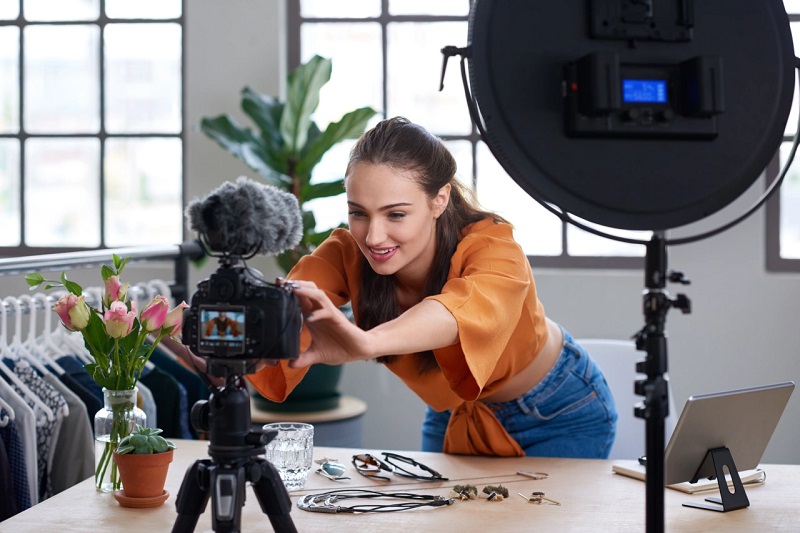
The contemporary photographer rarely works in a vacuum where only the shutter click matters. Today’s creative ecosystem demands agility, versatility, and an ability to translate a single photographic session into a multifaceted visual narrative. Photographers are no longer just delivering high-resolution stills to private galleries or commercial clients; they are capturing ambient audio, recording behind-the-scenes sequences, producing vertical video teasers, and editing on the move.
While cameras and lenses will always serve as the structural backbone of visual art, specialized auxiliary gadgets bridge the gap between technical competence and creative execution. The right tools eliminate mechanical friction, allowing you to focus on light, timing, and composition without wrestling your setup. Investing in strategic hardware upgrades elevates production value while keeping field workflows nimble and responsive.
Ultra-Compact Magnetic RGB and Bi-Color LED Lights
Natural light is an exceptional resource until the sun dips behind a ridge or interior spaces offer little more than flat fluorescent overheads. Heavy studio strobes and monolithic softboxes have their place, but they paralyze mobile creators who need to move quickly across environments. The emergence of palm-sized, high-output LED panels has permanently altered on-location lighting.
Modern pocket panels feature full-spectrum RGB tuning, adjustable color temperatures, and high color rendering index (CRI) ratings that preserve natural skin tones. Magnetic housings allow these fixtures to snap onto metal railings, street poles, or vehicle frames in seconds, serving as instant rim lights or subtle hair accents.
For creative portraiture and product shoots, these miniature lights allow you to paint with color without hauling gels and bulky diffusers. Tucking a diffused warm-amber light behind a subject’s shoulder or adding a subtle cyan kicker along an edge provides immediate cinematic depth. Because many of these units link to smartphone apps via Bluetooth, you can control multiple lighting zones simultaneously without stepping out of your frame.
Quick-Release Camera Holsters and Modular Plate Systems
Missing a decisive moment while fumbling with neck straps or tripod screw mounts is an occupational hazard every field photographer understands. Traditional neck straps bounce heavy mirrorless bodies against your chest, strain the neck during long shoots, and snag on gear during transitions. Modular mounting systems and mechanical belt holsters solve this ergonomic dilemma.
Rigid belt clips and backpack mounts lock the camera securely against your waist or shoulder harness until you press a quick-release lever. Distributing weight across the hips reduces physical fatigue on long shooting days, and the camera stays positioned for an instant draw.
Standardizing your camera baseplates across an Arca-Swiss compatible ecosystem allows you to move seamlessly between a backpack clip, a carbon-fiber travel tripod, and an overhead rig without unscrewing a single mounting plate. Eliminating small mechanical delays preserves creative flow, keeping your hands free between shots while ensuring your primary body is accessible the moment light breaks through cloud cover.
Wireless Dual-Channel Audio Transmitters for Behind-the-Scenes Capture
Audiences connect with the process almost as much as the finished print. Documenting your creative journey through field journals, technical tutorials, and short-form video requires pristine sound, yet onboard camera microphones capture little more than hollow wind noise and mechanical lens chatter.
Compact, clip-on dual-channel wireless microphone systems have become indispensable for photographers building an audience. Modern transmitters weigh next to nothing, feature omnidirectional capsules, and operate over dependable digital frequencies that remain stable across crowded convention halls or remote outdoor parks.
Onboard Floating-Point Recording as Creative Insurance
The most valuable advancement in modern pocket audio gear is onboard 32-bit float backup recording. When shooting on location, sudden ambient spikes—passing freight trucks, unexpected applause, or crashing surf—regularly clip traditional 24-bit audio inputs, ruining the take. With 32-bit float recording enabled directly on the transmitter body, audio clipping becomes essentially impossible to distort permanently. You gain a safety track that can be normalized in post-production, freeing you from constantly riding audio gain dials while trying to nail manual focus.
Magnetic Filter Stacks and Variable Neutral Density Systems
Controlling incoming light traditionally meant carrying an assortment of threaded circular filters, spending precious minutes threading aluminum rings onto lens barrels, and occasionally cross-threading them in cold weather. Magnetic filter adapters replace that frustration with split-second modularity.
A magnetic base ring threads onto your primary lens diameter once; after that, neutral density, circular polarizers, and subtle diffusion filters snap on and off with magnetic tension.
Variable neutral density (VND) filters are particularly vital for hybrid creators switching between low-aperture portrait photography and cinematic video capture. By rotating the outer ring, you control exposure levels precisely, allowing wide-open apertures like f/1.4 or f/1.8 under midday sun without blowing out highlights or forcing unnatural shutter speeds. Adding a mild black mist or glow filter to the magnetic stack softens digital harshness, blooming practical highlights and lending an organic, filmic texture to digital sensor captures.
Programmable Compact Motion Rigs and Motorized Pan Heads
Dynamic movement adds instant polish to commercial b-roll, tabletop product styling, and sweeping landscape time-lapses. Heavy motorized sliders historically required dedicated flight cases and external lead-acid batteries, but modern micro-sliders fit into the water bottle pocket of an everyday backpack.
Pocket-sized motorized heads allow creators to program automated panoramic sweeps, repeatable multi-axis product spins, and day-to-night time-lapses with millimeter precision. Syncing automated camera movement with intervals of changing light yields footage that looks like high-end cinema, turning an ordinary tabletop setup into a fully realized production stage.
Rugged Direct-Capture External Solid-State Drives
Modern high-resolution sensors generate massive data streams. Firing continuous raw bursts or recording high-bitrate all-intra video quickly strains conventional internal memory cards, and swapping cards in dusty field conditions risks contaminating the sensor cavity.
High-speed, rugged solid-state drives (SSDs) designed with drop resistance, water-repellent housings, and multi-gigabyte transfer speeds transform how files are handled on location. Mounting a palm-sized SSD directly to your camera cage allows continuous direct-to-drive recording on supported camera systems, bypassing card bottlenecks entirely. Back at the workstation, editing directly from high-speed external storage saves hours of ingest time, letting you deliver finished galleries while the project momentum is fresh.
Curating Tools That Serve the Story
Gear acquisition can easily become an exercise in distraction if equipment is purchased without clear purpose. The most effective creators do not carry everything available on the market; they curate a targeted kit that removes physical barriers to execution. Whether it is a magnetic light that unlocks an unexpected portrait in an alleyway or a quick-release harness that saves your back during an eight-hour wedding shoot, the best gadgets do not call attention to themselves. They fade into the background, providing the silent, reliable foundation upon which compelling visual stories are built.
Meta Title: